
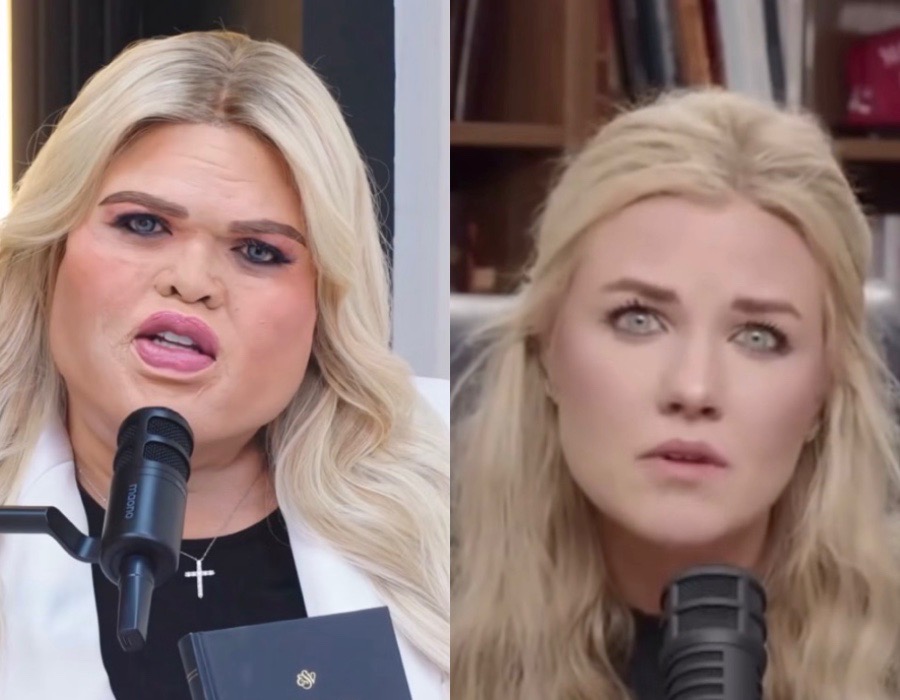
On Wednesday March 25th, comedian Druski posted a viral skit titled How Conservative Women in America Act, a two-minute-long video that presumably depicts conservative activist and Turning Point USA CEO Erika Kirk.
In the skit, Druski can be seen reenacting previous viral videos of Kirk. In one clip he came out with sparklers, in another he mocked her infamous stare, and lastly he imitated her most recent awkward comment regarding white men, repeating “we have to protect all men in America, especially all white men.”
As hilarious as the video was, viewers argued over the use of whiteface. People against the skit claimed it was racist and questioned why whiteface is acceptable as opposed to blackface.
While this article does not address whether blackface or whiteface should be used, it is to say that blackface has always been used as a racial attack against Black people, while for white people, whiteface has been predominantly used to satirically replicate the behavior or culture of white people.
To go back, blackface emerged in 19th-century American minstrel performances where white entertainers portrayed exaggerated caricatures of Black people for amusement.
These portrayals reinforced stereotypes depicting African Americans as unintelligent, lazy, or inferior, helping normalize racist attitudes within popular culture.
Blackface became so widespread that a well-known caricature, Jim Crow, lent its name to the laws that enforced segregation between white people and people of color, known as Jim Crow laws.
In modern contexts, blackface often continues to evoke this history of ridicule and mockery, which is why its use is widely understood as degrading rather than comedic, regardless of the performer’s stated intent or purpose.
As for whiteface, these performances frequently function as imitations or exaggerations of white culture rather than attempts to portray white people as inferior.
A good example is the 2004 film White Chicks. Actors Shawn and Marlon Wayans disguised themselves as wealthy white socialites using full prosthetic makeup. The humor came from exaggerated white cultural behaviors, including fashion, speech, and social interactions as the brothers navigated upscale events and social scenes.
The film’s modern use of whiteface was never used to demean white people, which meant it was a perfect example of how whiteface often functions as parody or social commentary rather than a racial attack, unlike blackface.
Now in a rare occurrence, blackface was used in a way that was not intended to be demeaning. In the 2008 film Tropic Thunder, Robert Downey Jr. appeared in blackface to portray an actor who underwent a controversial procedure to play a Black soldier.
In this film, Robert Downey Jr. did not seriously portray a Black man. Instead, his character was satirical and self-absorbed, emphasizing the absurd lengths actors go for realism rather than focusing on race itself. Despite the historical associations of blackface, his character did not mock or degrade Black people in the way they would have historically been caricatured.
In either case, Druski’s skit was not a racially motivated video. It was strictly a parody of Erika Kirk’s most recent acts.
And the examples mentioned are not to suggest that white face is ‘okay’, it’s just acknowledgement that between the two practices, they are not used identically. Blackface has always and currently been used as racial attacks while whiteface tends to be a reenactment of what white people are already doing.